

The Process and Benefits of Becoming an Employee-Owned Enterprise
This article was updated on November 26th, 2025
Employee ownership has moved from a niche organisational model to a proven and increasingly adopted strategy for sustainable growth, workforce engagement, and long-term business resilience. Across the UK and globally, companies ranging from professional-services firms and manufacturers to retail and engineering organisations are transitioning to shared ownership structures as a way to safeguard their legacy, reward loyal staff, and strengthen performance.
This blog provides an overview of how the transition process works, explores the principal forms employee ownership can take, and outlines the wide-ranging advantages it can deliver for founders, employees, and the broader organisation.
AdvertisementAdvertise here
Understanding Employee Ownership
Employee ownership refers to a business structure in which employees hold a significant and meaningful stake in the organisation. This ownership may be direct—employees hold shares individually—or indirect, through a trust that owns shares on their behalf. Many firms also adopt hybrid models combining both approaches.
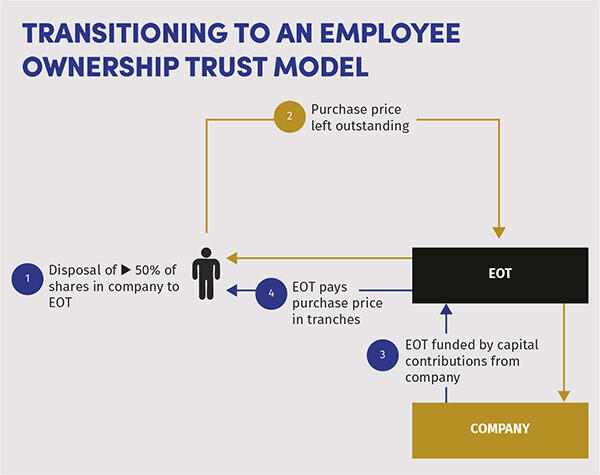
While the structural details differ, the central premise is the same: employees benefit financially from the company’s performance and have a collective interest in its long-term success. In the UK, the most common model is the Employee Ownership Trust (EOT), supported by government incentives introduced in the Finance Act 2014. This model enables owners to sell a controlling share to a trust tax-efficiently while ensuring the company continues to operate for the benefit of its employees.
The Process of Transitioning to Employee Ownership
Transitioning to an employee-owned structure is a strategic process requiring careful planning, robust governance, and specialist legal and financial advice. Though each organisation’s pathway is unique, the following steps represent the core elements of a typical transition.
1. Exploring Strategic Objectives
The process begins with clarity of intent. Business owners must consider why employee ownership is attractive—whether to secure succession, embed company values, share financial rewards, or ensure long-term independence. Equally, leadership teams evaluate whether the culture, structure, and financial performance align with an EO model. This initial phase often involves consulting specialist advisers and benchmarking against other employee-owned businesses.
2. Valuing the Business
A robust, independent valuation is essential. This valuation forms the basis for the sale to an EOT or direct employee share scheme. Although the purchase price must be fair market value, the valuation process also assesses the business’s ability to finance the transaction through future profits.
3. Defining the Ownership Structure
Organisations must determine whether ownership will be:
- Indirect, usually through an Employee Ownership Trust holding at least 51% of shares
- Direct, via share plans such as Share Incentive Plans (SIPs) or Enterprise Management Incentives (EMIs)
- Hybrid, combining trust ownership with direct individual shareholding
For many businesses, especially SMEs, the EOT route provides simplicity, long-term stability, and favourable tax treatment for sellers.
4. Securing Funding for the Transition
Employee-owned transitions are typically structured as vendor-financed transactions. This means the business funds the purchase over time from future profits, rather than requiring employees to contribute personal funds. External financing is also possible where accelerated payment is desirable.
5. Establishing Governance and Leadership Models
Governance is central to successful employee ownership. An EOT structure normally involves:
- A corporate trustee board
- An employee council or employee forum
- A trading board responsible for day-to-day leadership
Clear delineation of responsibilities ensures the business operates efficiently while giving employees meaningful influence.
6. Legal and Regulatory Execution
Specialist advisers manage the drafting of trust deeds, share purchase agreements, financing arrangements, and all statutory requirements. This phase culminates in the formal transfer of shares and establishment of the trust.
7. Communication and Cultural Integration
Perhaps the most vital phase is shaping an ownership culture. Transparent communication, ongoing engagement, and training help employees understand what ownership means in practical terms. An employee-owned company thrives when everyone recognises both their responsibilities and the benefits of collective success.
The Benefits of Employee Ownership
The advantages of employee ownership extend far beyond financial considerations. The model fundamentally reshapes organisational dynamics and can unlock exceptional long-term value.
1. Stronger Business Performance
Extensive research demonstrates that employee-owned businesses tend to outperform their non-EO counterparts across multiple metrics. The sense of shared responsibility commonly drives higher productivity, innovation, and quality. Employees who have a stake in the outcome naturally behave in ways that support efficiency and profitability.
2. Greater Employee Engagement and Retention
Employee ownership increases commitment, job satisfaction, and loyalty. When individuals know their efforts directly influence organisational performance—and their own reward—they engage more deeply with their work, adopt proactive problem-solving behaviours, and contribute actively to continuous improvement. Turnover is often significantly lower in EO firms, reducing recruitment and training costs.
3. A Resilient and Sustainable Business Model
Employee-owned businesses frequently demonstrate strong resilience during economic downturns. The higher level of internal cohesion, combined with long-term thinking inherent in shared ownership, helps organisations weather challenging market conditions more effectively. Decision-making tends to focus on sustainable growth rather than short-term gains.
4. Enhanced Business Continuity and Succession Planning
For owners seeking a dignified exit without compromising the business’s future, transitioning to employee ownership provides continuity and stability. Instead of selling to a competitor or private equity firm, founders can hand over stewardship to those who know the business best. This safeguards jobs, preserves company culture, and maintains independence.
5. Cultural Strength and Alignment
Employee-owned organisations often exhibit a strong sense of shared purpose and collective identity. Values become deeply embedded, and cultural alignment strengthens as employees develop a greater voice in decision-making. This fosters trust, transparency, and collaboration across the workforce.
6. Tax Advantages for Sellers and Employees
The UK’s EOT framework includes notable tax incentives:
- Sellers transferring a controlling interest to an EOT may qualify for Capital Gains Tax relief, enabling a tax-free sale.
- Employees of EOT-controlled companies can receive annual tax-free bonuses (up to the current statutory limit).
These incentives make the model financially attractive and cost-effective for founders and staff alike.
7. Improved Customer and Community Relationships
Organisations with empowered and engaged workforces often deliver stronger customer service and generate higher satisfaction levels. Communities also benefit when businesses remain locally anchored and committed to long-term employment. Many employee-owned firms take pride in contributing positively to the regions in which they operate.
Common Misconceptions
While employee ownership offers compelling benefits, a few misconceptions persist:
- Employees do not manage the business day-to-day simply because they are owners. Leadership teams continue to operate as normal, but with enhanced accountability to the employee body.
- Employees are not required to invest personal funds, especially under the EOT model. Ownership is collective, not individual debt-based.
- Decision-making need not become slow or cumbersome. Effective governance structures ensure clarity, efficiency, and strategic focus.
These clarifications help organisations understand that employee ownership is both practical and scalable.
Is Employee Ownership Right for Every Business?
While the model offers significant advantages, it is most effective for organisations that possess:
- A stable and profitable trading history
- A strong and cohesive internal culture
- Leadership willing to embrace participatory governance
- A founder or owner seeking legacy-focused succession
It may be less suitable for early-stage start-ups seeking rapid capital deployment or businesses with highly volatile revenue streams.
Wrapping Up…
Employee ownership is more than an alternative corporate structure—it represents a commitment to shared prosperity, sustainable growth, and principled stewardship. For founders, it offers a dignified succession route that protects their legacy. For employees, it creates meaningful financial and cultural participation. For the organisation as a whole, it fosters resilience, innovation, and long-term competitiveness.
As interest in responsible and sustainable business models continues to grow, employee ownership stands out as a strategy that benefits every stakeholder. With clear planning, strong governance, and open communication, transitioning to an employee-owned enterprise can be one of the most transformative decisions a business ever makes.
